Exterior walls are often directly exposed to rain and sunlight, causing paint to fade quickly, walls to crack, and moisture to seep in. One of the most effective methods, widely chosen by builders and homeowners today, is installing waterproof metal sheets on walls. This article provides detailed instructions on how to properly apply this technique so that your walls remain durable, beautiful, and highly resistant to moisture.
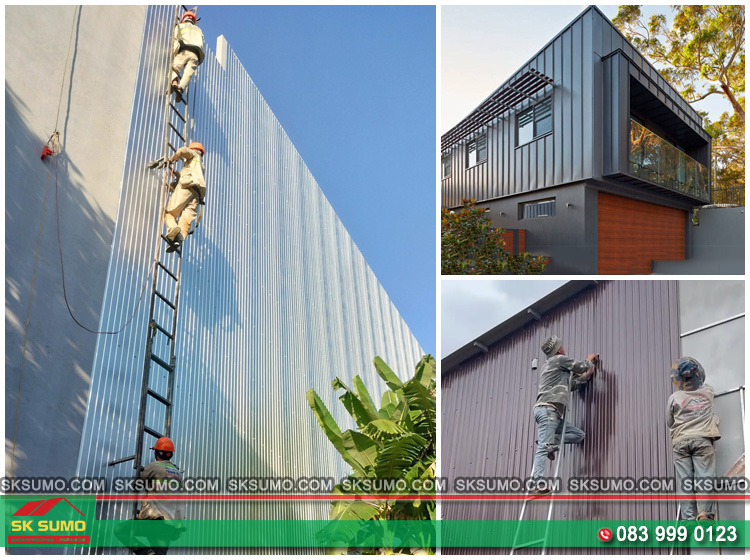
Exterior walls exposed to the weather year-round are prone to reverse seepage, peeling, and staining. This is not only an aesthetic issue but also affects structural durability. Installing waterproof metal sheets on walls is a long-term solution that helps protect the building effectively.
According to the Vietnam Waterproofing Association (2024), projects that use metal cladding for waterproofing reduce repair costs by up to 70% compared to traditional waterproof-painted walls.
Before construction, proper preparation of materials and tools is crucial to ensure the quality, water-tightness, and durability of the metal sheets.
Note: Inspect the wall before installing waterproof metal sheets to ensure the surface is dry, free of large cracks, and not hollow. If the wall is already deeply soaked, apply waterproof mortar before installing the metal sheets.
To achieve a durable and beautiful result, installing waterproof metal sheets must follow the correct procedure. Below is a step-by-step guide.
Determine the area to be covered, the position of the frame, and the direction of the sheets for natural drainage. Use a tape and level to measure wall flatness. If the wall is slanted or uneven, add spacer bars to level the frame.
Use a concrete drill to screw the steel frame onto the wall. The distance between vertical bars should be 50-60 cm, and between horizontal bars 80-100 cm.
Ensure the frame is parallel and square. This step prevents the metal surface from warping after installation.
Measure the exact height and width of each wall section. Use a metal cutter for precise cutting. Keep a safe distance while cutting and avoid bending the edges, as it affects the tightness of joints.
Start from the bottom corner, using stainless steel dome-head screws to attach each sheet to the frame. Overlap each sheet by at least one corrugation to prevent reverse seepage.
After fastening, check flatness and tightness at all joints.
Apply PU sealant or waterproof silicone along the seams between sheets and wall edges. Pay attention to corners where the wall meets the roof - common leakage points.
If needed, apply waterproof tape or a matching waterproof coating to complete the finish.
After installation, spray water lightly to test tightness. If no leaks or damp spots appear, clean off dust and repaint the steel frame edges for better aesthetics.
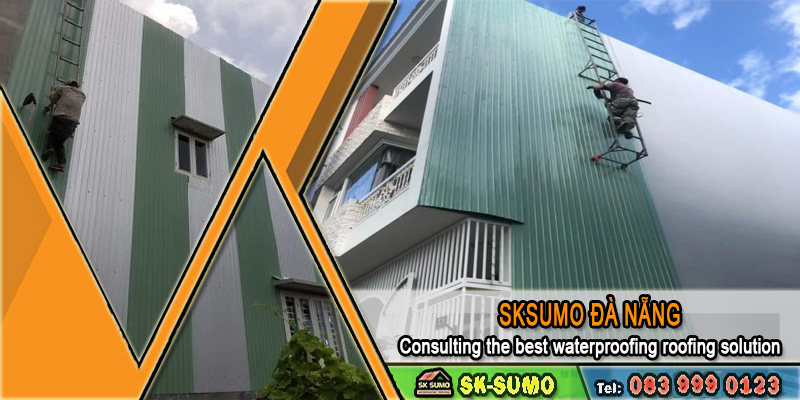
Although simple, installing waterproof metal sheets can still lead to errors that reduce performance.
|
Common error |
Cause |
Solution |
|---|---|---|
|
Sheet edges not sealed properly |
Incorrect measurement or insufficient overlap |
Recut edges accurately, overlap 1-1.5 corrugations |
|
Wall still leaking |
Wall not waterproofed before installation |
Apply waterproof mortar or primer before installing |
|
Metal bulging or bending |
Uneven frame or loose screws |
Re-adjust frame, tighten screws evenly |
|
Adhesive peeling, leaking at joints |
Low-quality sealant used |
Replace with genuine PU sealant, apply evenly and let dry completely |
After installing waterproof metal sheets, it is important to check their effectiveness to ensure quality results.
• Direct water test: Spray water continuously for 10-15 minutes on the installed area and observe if any leakage appears inside.
• Use a moisture sensor: Measure surface humidity before and after installation for comparison.
• Observe after rainfall: After 2-3 heavy rains, check the inner walls again to confirm long-term performance.
• Evaluate aesthetics: Sheets should be flat, with even joints and uniform color.
If installed properly, the metal cladding can protect walls from water damage for 8-12 years without major maintenance.
A few small tips can make your waterproof metal wall installation more effective and visually appealing. If you live in central Vietnam, especially Đà Nẵng, choose cold-rolled or powder-coated galvanized sheets to resist salt corrosion better.
These small details help the structure last longer, reduce reverse seepage, and keep the exterior looking new.
To make the right choice, compare metal cladding waterproofing with other solutions such as waterproof paint, bitumen membranes, or tile cladding.
|
Method |
Lifespan |
Cost |
Waterproof effectiveness |
Maintenance |
|---|---|---|---|---|
|
Waterproof paint |
2-3 years |
Low |
Moderate |
Requires regular repainting |
|
Bitumen membrane |
5 years |
Medium |
High |
Requires specialized skills |
|
Tile cladding |
8 years |
High |
High |
Hard to replace when damaged |
|
Metal wall cladding |
8-12 years |
Medium-low |
Very high |
Easy to maintain, replace individual sheets |
Installing waterproof metal sheets on walls is a smart solution - it keeps the walls durable and beautiful while reducing maintenance costs. When done with proper technique and quality materials, waterproofing effectiveness can last over 10 years. Homeowners should prioritize this method for areas frequently exposed to heavy rain or intense sunlight to ensure comprehensive building protection.
No. The wall should first be pre-treated with waterproof mortar or coating to prevent moisture from being trapped behind the metal layer.
No, if it’s only for decorative or light waterproofing purposes. However, for tall buildings or large surface areas, local approval may be required.
Cold-rolled sheets in blue or silver are most popular because they reflect heat well, maintain color, and resist rust effectively.
Yes, if the area is small and you have the tools. For high walls, hire professionals to ensure safety.
Yes, check once a year, clean the surface, and repaint the steel frame to maintain durability and appearance.